

4.5K
Downloads
163
Episodes
The Author Your Brand show takes a deep dive into becoming a best selling author, sometimes without writing a word. The host, Doug Crowe, interviews CEO’s of multi-million dollar firms, successful entrepreneurs, and “slightly” famous people. Guests include the former CMO of Starbucks Asia, the Inventor of GPS (who sold the company he founded for $6.6 Billion) & NYT bestselling authors. This daily LIVE show uncovers the mindset of these visionaries & their success tips.
Episodes
Wednesday Oct 20, 2021
Wednesday Oct 20, 2021
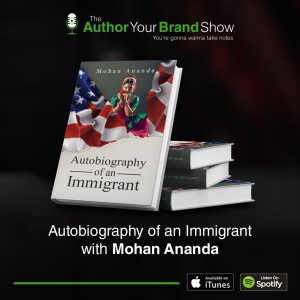
Dr. Mohan Ananda founded Stamps.com, a NASDAQ registered company providing Internet-based mailing and shipping solutions using technology he developed. A successful venture capitalist, he has raised over $450 Million in public and private offerings for Stamps, Envestnets, and JAB Holdings
His book, Autobiography of an Immigrant, is a memoir about a man who left the comforts of a modern home in a faraway India and did what he had to do to make a living and succeed in a new land.
Summary:
- sustainability is really important to make money.(21:13)
- First of all you have to develop a deck, a pitch deck presentation and in the pitch deck you have to give all the technology. What do you do. What the potential customers are what the possibility of penetrating and how do you get of those things. … In addition you have to do a financial forecast….in the forecast there are two elements. What are their revenue stream. How can you bring revenue and …you also have to have the expenses. (28:38)
- Most entrepreneurs, with a vision focus on their vision. They focus on what they can do. And they're ignored because they don't have the connections and network the people in place that you've established over the years… You better find someone who has because otherwise you might not get a meeting. And if you do you might be discarded or ignored or rebuffed rather quickly. (33:54)
His book can be purchased on Amazon https://amzn.to/3vl3Acl

Tuesday Oct 19, 2021
Tuesday Oct 19, 2021
Summary:
Jeff Standridge and Jeff Amerine, authors of Creating Startup Junkies, talks about the unique proposition of building sustainable entrepreneurial ecosystems in unexpected places. Arkansas, nicknamed the Natural State, a landlocked state in the South Central region of the US, and many other states, are well-positioned to inspire and empower not only entrepreneurs but also innovators through the intentional cultivation of talent, local engagements, and capitalization.
Key Takeaways/Main Points:
In this episode we discussed….
1. "It's possible to build incredible new companies, not in the places that we all associate with the startup scene." (6:03)
2. “If you can build something locally, rather than recruit something in, it's going to stick and there's going to be economic vitality that will follow.” (6:44)
3. "There are measurable outputs and outcomes that show economic vitality in terms of new ventures, jobs created, patents created all the kind of stuff you would typically measure, can happen if you use this kind of model." (16:02)
4. “Start where you are, get a group of committed change agents together, gain consensus, and then build a plan to start working from there.” (20:49)
5. “You have to have somebody that is going to be a key champion or leader to fund your organization.” (20:30)
6. “They need to make sure that the company they're going to start has a product or a service that fits the market, that there's a market need. And people are willing to pay for the problem that they're trying to solve.” (22:31)
7. "So a good bit of advice we give is always to build a business like you might sell it someday, which means you've got to have good documentation and good process, and you've got a good succession plan." (23:54)
8. “Solo entrepreneurs don't create a business; they create a job for themselves” (24:12)
For a copy of their visit Amazon Creating Startup Junkies: Building Sustainable Venture Ecosystems in Unexpected Places

Monday Oct 18, 2021
Monday Oct 18, 2021
Allyson Roberts is a cognitive-behavioral expert who combines science and spirituality to help people authentically change their minds so that their goals can finally be achieved. She is the author of several books with her latest just released. It’s called Behind the Power and is co-authored with thirteen of her clients who used Allyson’s methods to conquer their greatest challenges.
Allyson Roberts knows what it takes to make it in this world. As a young woman who found herself homeless, pregnant, and living in her car she turned to the writing of Napoleon Hill for comfort and guidance. Little did she know then what a huge impact his philosophies would make on her life.
Keywords:
- We are either the slave to our brain or the boss of our brain. There's really no in-between. (1:51)
- We have these automatic things that we do in life, where we're not present and our reptilian brain that's done the same thing over and over and over again, takes over and it happens with anxiety. It happens in all kinds of situations in life. (2:25)
- The thoughts that you think are just sentences until you attach the emotion to them. And so all those anxiety-ridden thoughts that you're too old, you're too fat. It's too late. You're too stupid……those are just sentences. And they don't mean anything until we believe them. (2:49)
Her book is available via Amazon: https://www.amazon.com/gp/product/B09FJ34N9C/ref=dbs_a_def_rwt_bibl_vppi_i0

Friday Oct 15, 2021
Friday Oct 15, 2021
In this episode, Michael Klein talks about the principles and keys to investing in the present economic state. Some of the key points mentioned were how smart and talented people overpowered real estate experts in terms of unique and successful investments. For Klein, deals are not found but created and that is what he highlighted in his recent book, "How to Make Sensible Investments in a Senseless Economy: Six Proven Steps to Prevent Financial Disaster."
Key Takeaways/Main Points:
In this episode we discuss….
1. “The basis of the book is to try to manage through a process that you can repeat time and time again, that causes you to have, good answers.” (4:02)
2. “If I'm doing business with smart people that are really talented at what they do, I've mitigated substantially all my risks, not all of it, but, but a big chunk of it.” (8:13)
3. “So if you don't think real estate takes talented people, I think you're mistaken.” (13:54)
4. “We're in this weird quasi world of capitalism meets socialism.” (19:26)
5. “Retail is bad if you're not a great operator” (25:24)
6. “And it's a great way of taking something that already exists, already has lots of plumbing, already has lots of electrical and converting it. So, I think that that's a pretty creative, reuse of something. It's not super unique, but it's done” (30:08)
7. “That has nothing to do with the real estate. That had everything to do with the people, the real estate was just sitting there” (33:56)
8. “Deals are not found. They're created” (34:03)
9. “The United States at the end of World War II had debt levels that were similar to where we are now. And we worked our way.” (36:55)
10. “So we were producing a product that would cause us to generate the money necessary to pay down debt” (38:22)
11. “How to Make Sensible Investments in a Senseless Economy. It's six proven steps to prevent financial disaster by Michael Klein and Stanley Kafka” (45:06)
For more fascinating stories of the alternative investment world and to learn the 6 fundamental questions investors should ask to decrease risk in any economy and market read Klein's book now available on Amazon: How To Make Sensible Investments in a Senseless Economy.
Thursday Oct 14, 2021
Thursday Oct 14, 2021
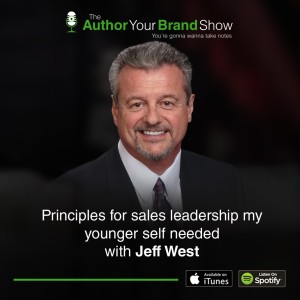
Jeff West, an influencer and coach in sales management, converses about how salespeople or business aspirants can effectively and sustainably hit the target.
He emphasizes the urgency of establishing chemistry that brings people in and makes them want to stay.
According to West in business, you have to create a need and convince your clients that whatever you're selling is something they will be better off having.
Key Takeaways/Main Points:
In this episode we discussed….
1. “The story, of course, revolves around a young salesman and a homeless man that kind of changes his total perspective.” (6:14)
2. "I use the branding of fusion points now about finding that emotional and logical connection that will keep you going. For me, that connection was my daughters.” (12:07)
3. “You cannot expect a six-figure income if you're only going to put in minimum wage effort. You've got to be willing to go out and get good at your craft, learn the craft, and then apply that, because you know, knowledge is not really power. (16:32)
4. "Whatever you're selling, find something that you truly in your heart believe that your customer is better off by having that product or service on a day-to-day basis.” (16:58)
5. “You need to ask the right questions. You'll know your market and you'll know what's going on, but you need to ask the right questions and find out what those needs are and be genuinely focused on helping that person solve that issue with that company that you can put them with.” (17:35)
6. “You've got to learn how to build a chemistry that brings people in and then makes them want to stay.” (22:51)
7. “You don't ever want to create a situation where someone thinks you're a pest or when you're trying to follow up with your prospects, but you want to build relationships.” (31:17)
8. “Never underestimate the value of following up and building that relationship.” (32:09)
9. “Good lead for me is going to be any company that has a sales team that needs sales and sales leadership training, or any small employer that is competing with the giants in their industry. Those are good leads for me.” (33:42)
Jeff can help you build a sustainable and profitable business by teaching you how to attract and retain great people in a competitive hiring market, and by mentoring you in developing a great sales team. To start learning how visit https://jeffcwest.com.

Wednesday Oct 13, 2021
Wednesday Oct 13, 2021
Joe Sanok is a keynote and TEDx speaker, business consultant, and writer for PsychCentral. He has been featured on the Huffington Post, Forbes, GOOD Magazine, Reader’s Digest, Entrepreneur on Fire, and Yahoo News.
His podcast show, The Practice of the Practice Podcast, is recognized as one of the Top 50 Podcasts worldwide with over 100,000 downloads each month. He has interviewed Pat Flynn, John Lee Dumas, and Lewis Howes.
In this episode, Joe talks about his new book, Thursday is the new Friday: How to Work Fewer Hours, Make More Money, and Spend Time Doing What You Want and how the four-day workweek became more relevant during the pandemic. He also shares the research supporting how a four-day workweek boosts productivity and creativity.
Joe also shares how he landed his book deal with Harper Collins and used the money they gave to market his book.
Key Takeaways/Main Points:
In this episode we discussed….
1. “if a Kalamazoo community college can switch to a four-day week and experiment and just say like, does this work for us? I think it's important for businesses to just question, why have we done it this way?” (01:08)
2. “So most people, you know, they hear things like sprint or batch where you're going to do all this work….. (09:12) And so in the book, I talked about discovering your sprint type, uh, because someone may try the typical batching sprint. And they're like, that doesn't work for me, I guess I'm not a sprinter. But then the reality is, you just don't know your sprint type.” (08:54)
3. “The way it works is if you get a meeting with a Harper Collins it's as much me making sure they're a fit as them making sure I'm a fit. It's not an interview to try to get me to just join it's us seeing if there's a good relationship there and the amount of kind of business books that they are putting out for me felt like a very solid fit.” (18:16)
To start making Thursday your new Friday, you can purchase Joe’s book on Amazon (https://www.amazon.com/Thursday-New-Friday-Fewer-Hours/dp/1400225981) or you can visit his website https://joesanok.com.

Tuesday Oct 12, 2021
Tuesday Oct 12, 2021
Kim Thompson Pinder shares how she became the CEO of a successful publishing company and a book writer.
Kim did not write for 30 years after a teacher told her at seven years old, "She was no good at writing and should stop." She came to a crossroads and chose to let those painful words go. Since she set her words free,
she has gone on to author five books, with two more on the way.
Currently, she is helping fellow writers to be successful in the publishing industry by “capturing their voice and writing it in a way that captivates their [target] audience”. She emphasizes the importance of three things when publishing a book: 1) Consider who you are writing the book to; 2) the message you want to send them; 3) What stories from your life can you tell, that's going to help the person relate and then take that to the next level.
Key Takeaways/Main Points:
In this episode we discuss….
1. “I forgave my teacher and I decided it was time for me to let my words go.” (04:26)
2. “And finally I had this blog post. I put it up on the website and I had just enough courage to ask a few people to read it.” (06:26)
3. "And then, you know, I knew it was time to start writing a book" (06:45)
4. “the first one I wrote was network marketing, recruiting, 50 free or low-cost ways to find…recruits and customers.” (07:51)
5. “What was the transition from pseudo-code MLM to that of (helping other entrepreneurs create their books)?" (09:12)
6. “I just started taking on writing jobs because I needed extra money. And because I was already an established author, my books had good reviews.” (10:40)
7. “how ghostwriters, I'm guessing your people as well, have to help mirror that person's voice” (13:05)
8. “we just really focus on capturing our client's voice and more importantly, the heart of their message because every client that I've worked with, and I'm pretty sure Doug has as well, has a strong message that they want to share a strong message or strong story. And so, it's capturing that voice and writing it in a way that captivates the audience” (14:20)
9. “Business went up 300% last year because I stopped talking to egocentric people and started focusing on people with a story that matters.” (16:05)
10. “the craziest book would be Shari Lueck, My Skeletons Have Names and she tells her incredible story of growing up in an abusive home.” (21:45)
11. “first of all is, you want to know who you're writing the book to. It needs to be targeted. If you want your book to be effective, it has to be targeted.” (26:40)
12. “What I would suggest is just really get a good grip on who you want to write to and the messages that you want and the stories of yourself that you want to share.” (27:28)
13. “Sometimes we get so emotionally attached to what we write but find that editor, that's not only going to do your grammar, but it's also going to help you develop the book.” (28:13)
14. “Don't stay emotionally attached to that book because it's more about making sure that the reader's going to benefit from the book, than making sure that you write all the things that you want” (28:44)
15. “My book, Author to Authority, keeping with the brand right, is coming out in October.” (29:27)
Kim understands the power of words and cannot wait to share them with you on her Author To Authority podcast. www.AuthorToAuthority.com/podcast

Monday Oct 11, 2021
Monday Oct 11, 2021
“Afformations" is what Noah St. John wants his clients to ingrain in their lives. This is different from the positive affirmations many psychologists would encourage people to do. The importance of asking oneself the "why questions" will lead to the connection of his/her inner and outer game. Our inner game is how well we communicate with ourself and the outer game is how well we communicate with the outside world. In this episode, John emphasizes the importance of both factors in being successful and truly happy.
In this episode we discuss....
1. “When you say this positive statement,75% of people actually don't believe it. And the only people who believe it are the ones who are already there” (5:00)
2. “Millions and millions of people are unconsciously holding themselves back from the very thing that they want.” (12:29)
3. “the why is more powerful than the how.” (14:26)
4. “your entire life is only determined by two things. Number one is the quality of your communication with the world inside of you and the second thing is the quality of your communication with the world outside of you.” (22:26)
Get a copy of Noah’s new book Get Rid of Your Head Trash About Money FREE at https://SendMeaBookNoah.com
Friday Oct 08, 2021
Friday Oct 08, 2021
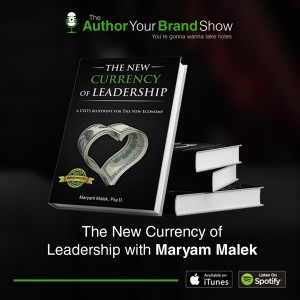
Leaders have a rippling effect in the organization, says Mary Malek in her interview with Doug Crowe. She talks about the vital role of leaders in the corporate world and how crucial it is for them to be accountable to their people. From a couple of decades working for different organizations, Malek saw how leaders failed to recognize the importance of soft skills – communication, culture, and motivation. These, which she called the new currency of leadership, are what she hopes to instill with the CEOs and executives in her professional groups. This is also the core topic of her book, "New Currency of Leadership”.
Key Takeaways/Main Points:
In this episode we discuss….
1. “What I'm doing now is the most fulfilling thing I've ever done in my life, which is working with CEOs in the orange county, Los Angeles area, trying to help them become a better version of themselves, as well as, as we know, leaders have a rippling effect on the organization.” (2:32)
2. “I was teaching at Pepperdine and Chapman University and I was working with students, but I realized it was from the bottom up and I really needed to do from top-down in order to make that difference.” (3:25)
3. “And the whole idea is how can we collectively make each other's lives better, come up with best practices and really question each other about the decisions that we're making.” (4:27)
4. “I really think that running a company without having some sort of an accountability from a peer advisory board is really malpractice.” (5:04)
5. “The book really came from a couple of decades of working in organizations and recognizing some of the things that were not addressed well, and they were the soft skills that needed to be there, but they weren't.” (7:19)
6. “Sometimes when it goes through an MBA program, a lot of focus is on the financing and the financial well-being of an organization and the responsibilities to the shareholders, but what happens to their responsibility, to the people that worked at.” (7:40)
7. “The new currency is how are we, these things that do actually contribute to the bottom line and those things are: are people motivated? or are they engaged? or is there good communication going on?” (8:53)
8. “How do you measure the currency of innovation?” (9:25)
9. “You've got to know what's going on in the front line. You got to know what's going on at the middle management and then really see where the gaps are.” (12:35)
10. “The book is called New Currency of Leadership by Mary Malek, number one bestseller” (17:32)
You can purchase Maryam's book on Amazon The New Currency of Leadership to read her 16 point plan to be a better leader.
Thursday Oct 07, 2021
Thursday Oct 07, 2021
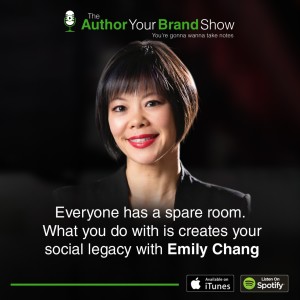
Emily Chang talks about what inspired her in writing her book, the Spare Room, and how she hoped for people to feel more positive about themselves when reading her story. She had never thought of lending her "spare room" at home to homeless children and young adults for years. But the whole experience turned out to be an avenue for her to start something new, to write books to bring positive change to society. In this interview, she shares, "When you're in the heart of giving in a meaningful way, that you, I feel you are uniquely designed to give, it's not sacrificial. It's not bitter or painful”
Key Takeaways/Main Points:
In this episode we discuss....
1. “We don't define success or failure. We simply say, we're going to try it.” (2:54)
2. “Some things you don't have to wait until you retire to do. Some things maybe are better done now while they're fresh in the mind.” (4:13)
3.“You can do so much more than you can possibly anticipate.” (7:22)
4. “When you're in the heart of giving in a meaningful way, that you, I feel you are uniquely designed to give, it's not sacrificial. It's not bitter or painful.” (7:38)
5.“You're living with intention and intention will find you, like, you will become a magnet for people who need what you have to give.” (10:25)
6. “So your legacy is something that you leave in the world around you such that it's better for having had you there.” (23:10)
Get more insights on building your social legacy at https://social-legacy.com/work/.